photo Contributor1.png

Wednesday, April 21, 2010

Denon AH-C560, C260 announced

Denon announced two new models to their current low and mid class IEM, the C260 and the C560. Denon claims that the use of different types of materials (including resin and aluminum) in the housing eliminates unwanted vibration and improves sound, though I really have my doubt how effective they really are. Anyway, that's why Denon is calling these models 'hybrid', not because it uses hybrid transducer or helps you save fuel. C560 should hits the street by May with C260 a month later. MSRP are estimated to be $86 and $32 for both models in Japan. You can expect the international price to be higher.

[REVIEW] Phiaton PS210 - The Half-Blood Prince

First, I want to thank Phiaton for the review sample.

As a headphone brand, Phiaton is relatively new to the scene. But as a company, it has a rather long history. Phiaton was setup by Cresyn Korea in 2008 as an initiative to launch its own high end headphone line. Up to that point, Cresyn has been very successful in the headphone OEM/ODM business all over the world, yet not quite known for their own brand of headphone. For a company that has been in the business for over 50 years and currently owns 5 manufacturing plants with 15 thousands employee, one can imagine Cresyn doesn't see Phiaton as a summer project, but rather want it to be a force to reckon with in the headphone business. It is their chance to showoff the company's audio and technological excellency.


Spec
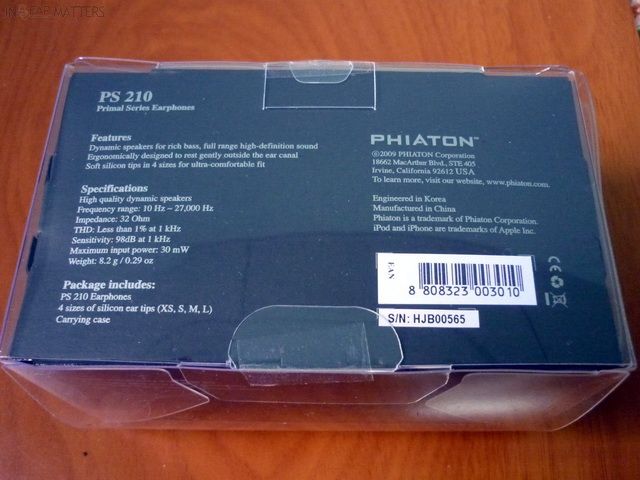
Driver: Single dynamic transducer
Frequency range: 10 Hz ~ 27,000 Hz
Impedance: 32 Ohm
THD: < 1% @ 1 kHz
Sensitivity: 98dB @ 1 kHz
Maximum input power: 30 mW
Weight: 0.29 oz / 8.2 g without cord
Connector: 3.5mm gold-plated mini jack.
Cable length: 115cm


Packaging, Build Quality and Accessories
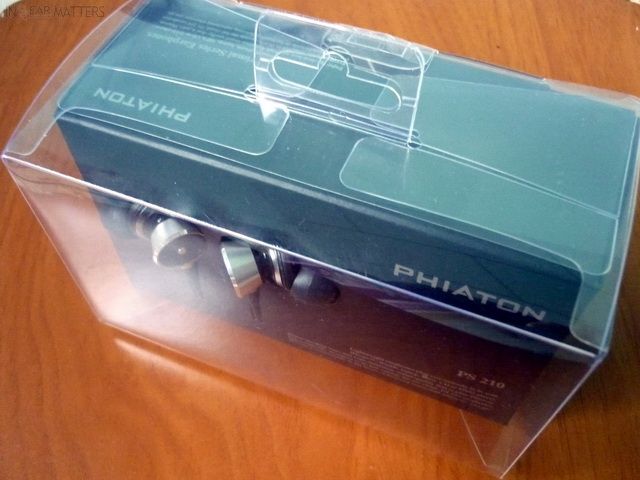
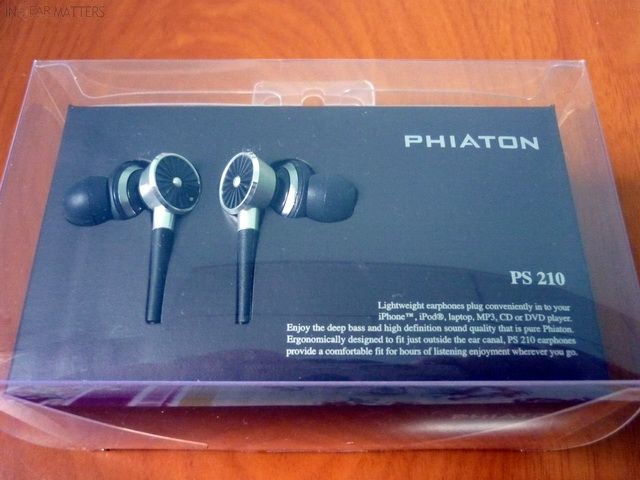
PS210 comes in a transparent plastic box with quite a small footprint. The earpieces are however, hold inside an inner paper box and showcased in their full glory. Not only the inner paper box is hold firmly by some smart design on the outer plastic box, the whole package also feels like an elaborate origami puzzle with only one place glued while the rest just folded into their own places. It just looks classier than simply blister packed and sealed the whole thing.


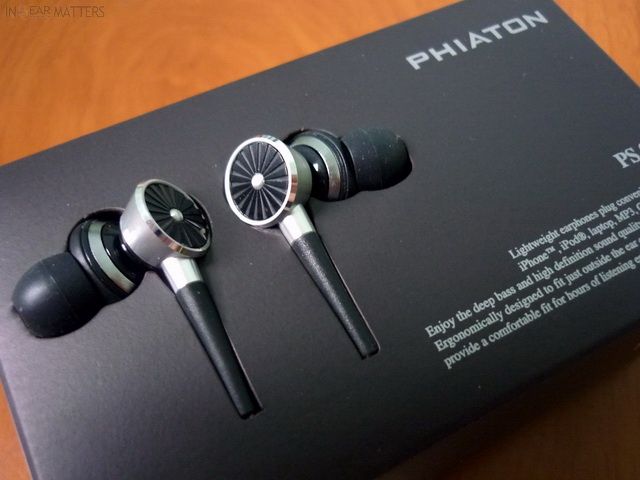
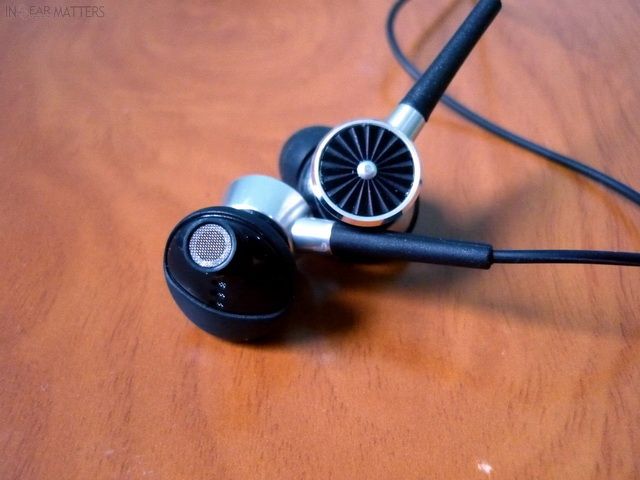
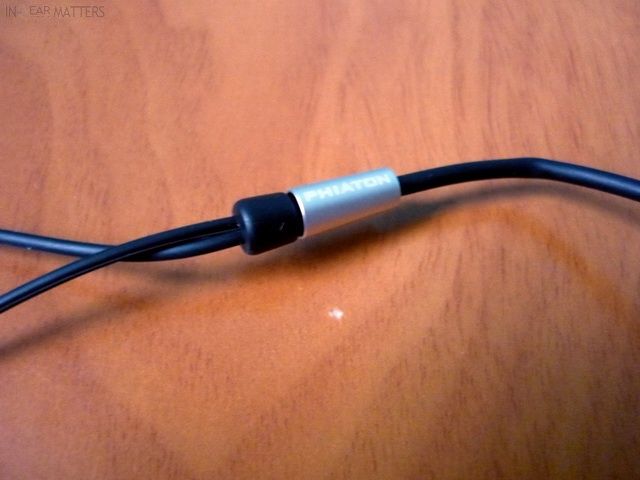
If you read my previous review on several Cresyn IEM models, you will know that there is really nothing to concern about when it comes to the much higher class PS210. The earpeice itself is half aluminum (where the turbine like design is) and half plastic (where the transducer is housed). The strain relief on the earpeice is a little hard but still adequate. The cable is quite tangle- and memory-free while not appears to be too springy or too soft. The Y-splitter is on the small side but the added aluminum cylinder gives it more 'substance'. If there is one place I would like to see improvement, it will be the mini plug. The strain relief and overall build is decent but it is a little too small to handle regularly. I would prefer a longer plastic handle or a L-shaped plug as it will be easier for insertion and removal, not to mention the added durability.


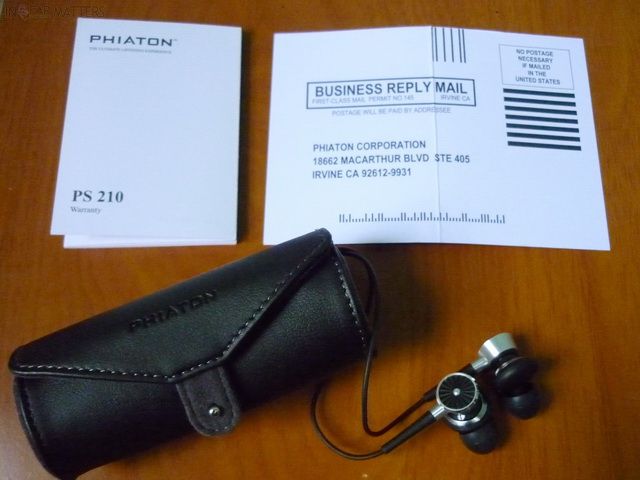
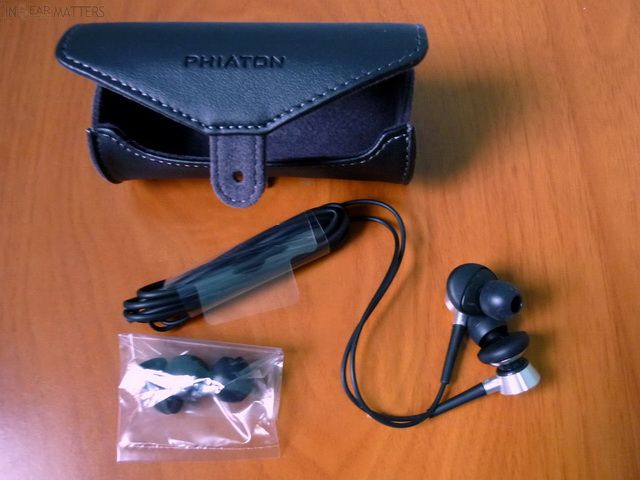
Accessories are average in quantity. There is just 4 pair of different sized single flange eartips (XS, S, M, L) and a carrying case. The eartips are pretty decent, but I do prefer Sony Hybrid (or good quality clone in this case) for better seal and added warm to the sound - and for extra special, I find out that Comply T400 works wonder with both the fit and the sound, but let's keep this discussion to the next section. While the eartips might not be the best there are, the case is however a gorgeous looking leather pouch in cylinder shape. It is great to the touch and houses the IEM perfectly fine. The leather case itself really adds some class to the whole package.


Last but not least - Phiaton calls the PS210 earpieces' design "half in-ear", which is true in both design and actual audio performance sense. Similar design for dynamic transducer based IEM is not uncommon. From the more distanced Sony MDR-EX85 / EX90 to the closer looking Audio-Technica ATH-CKS70, the idea of this design arises from the need to place a relatively large dynamic transducer closer to the ear without actually jamming it in (nor the associated pain of course). The benefit of having a larger transducer is of course based on the simple concept that the extra room provides space for tuning and performance. What unique to PS210 is the openness of the design. As you can see in the picture, there are three small vents near the base of the nozzle (with grill underneath, I might add) - no doubt for sound tuning which we will also discuss in detail on the sound quality section. This feature truly makes the PS210 a "half in-ear" - you get the nozzle of a typical IEM which directs the sound into the ear canal, yet the vents make it performs a lot more like an earbuds. Needless to say, isolation is pretty weak on the PS210. The incomplete seal does make microphonics quite low.

Overall I am quite happy with PS210. Isolation is pretty disappointing but it is a trade off for PS210 unique sound quality. While an improved mini plug won't hurt, I think what I really want to see in the PS210 package is some Comply T400.


On a side note, PS210 is the winner of this year Red Dot Award. Interestingly enough, CKS70 won it last year. It would have been quite a showdown if Phiaton was able to submit the design last year when PS210 was already out.

Sound Quality
As always, a 50 hours minimum burn-in session on the IEM before review and nothing major was detected. Let's begin with eartips selection - getting the good seal is often half way of getting a good sound. In this case, it is not quite about a good seal. The stock eartips are fine in my opinion, but a little 'lack of substance' as they don't give the kind of sound I like. For those who have listened to a pair of top-end Audio Technica (CM7, CM700) or Bang & Olufsen A8 earbuds before, PS210 will not sound unfamiliar. It is a kind of clean, extremely airy and specious sound with a very crisp treble and relatively lean by most of today standard, a kind of sound signature that has been extremely popular in East Asia and actually been highly thought of over more than a decade in the region. I am not sure whether it is Phiaton's deep Asian root or simply a coincidence, but I must say I am quite pleasantly surprised at the first listen to find that kind of sound signature in an IEM.

Through I have a fair share of love for A8 as an earbuds, I do however like a more balanced sound in my IEM, at least more balanced than the stock eartips can provide. A simple quick fix is the Sony Hybrid eartips (or similar good quality clone), which add more warmth and forwardness to the mid (with a little leftover for the bass) and smooth out some of the graininess on the top end. For a totally relaxing sound however, I prefer the T400. I am not a big Comply user myself (mainly because of the cost), but this really works very well with PS210. It pretty much smooth out all the graininess and mellow out the sound just enough for it to 'disappear in the ear' - which is always a great aspect for any IEM in my opinion. This combination is especially well for classical or instrumental music.

For those who prefer a fuller body mid and bass (i.e. vocal lover), there is a simple mod that can be very effective. Just cut a tiny piece of transparent tape and seal off one of the vents on the base of the nozzle (the first one closest to the nozzle is generally the easiest). I can assure you this will give a rather magical mid and well bodied bass that makes any Jazz singing comes alive. A little Blu-tack will actually give you the same effect, but I rather not recommend it in the long run.

The overall sound signature is analytical, clean, very airy and specious with crisp treble while relatively lean in the mid and bass departments. Treble is well extended and very crisp with slightly graininess on the top yet full of detail. Mid is slightly recessed, but not by much. Bass extends decently low with good speed, but doesn't quite have the impact, body or depth. Soundstage is very wide. To smooth down the graininess and add warmth and forwardness to the mid and bass, Sony Hybrid eartips is recommended. For a relaxing sound, Comply T400 is a good choice. Also, sealing one of the small vents adds the much needed body, depth and texture to the mid and bass.


Verdict
There are so many simple ways that PS210 can be tuned to one's liking makes it a rather playful and enjoyable experience for me as both as listener and reviewer. Despite the fact that it doesn't have near enough isolation to actually be used in anywhere noisy, the "half in-ear" half earbuds-like quality of PS210 is what I consider a trade-off, not a total disadvantage from a sound quality point of view. PS210 will be a great choice for analytical listeners that are looking for openness that is not typically found in IEM and do not demand isolation, more so if you are willing to play around a bit. MSRP is $119 but street price can be as low as $95 - it is a no brainer for me.

A quick sum-up can be found here.

 This above rating is for Phiaton PS210 only and may change without notice. Please refer to the list for a complete listing.

Sunday, April 18, 2010

[REVIEW] VSONIC R02 Pro II and R04

First, I'll like to take the chance to thank VSONIC for the review samples.

For those who are interested in the company history - VSONIC was found in 1980 as a Chinese own Japanese company. In '95, the company setup its China factory for R&D and manufacture of headphone in order to fulfill the Japanese market. In '05, they began to market their products toward the China market as well as the rest of the world. While VSONIC itself might not be a big brand in the consumer headphone world, their OEM/ODM clients and partners are some of the most well known in the world. In fact, the bio-cellulose diaphragm used in the R04 Pro are said to be licensed from Sony, which perhaps serves as a testimony to the company relationship with the Japanese's giant.

SPEC
R02 Pro II
Driver: 11mm Dynamic
Rates impedance: 24 ohm
Sensitivity: 105dB / 1mW
Frequency Response: 12Hz to 25kHz
Distortion: ≤ 0.2% @ max sensitivity(20upa)
Channel Imbalance: ≤ 1dB (at 1000 Hz)
Rated Input Power: 10mW
Max Input Power: 30mW
Connector: 3.5mm gold-plated stereo mini plug
Cable: 1.3M with silver-plated OFC wires

R04
Driver: 11mm Dynamic with multi-layers bio-cellulose diaphragm
Impedance: 24 ohm +/- 10%
Sensitivity: ≥105dB
Frequency Range: 10-24,000Hz
Distortion: ≤ 1%
Channel Imbalance: ≤ 5dB
Rated Input Power: 10mW
Maximum Input Power: 50mW
Connector: 3.5mm gold-plated stereo mini plug
Cable: 1.3M with 6N mono-crystal OFC wires

Packaging, Build Quality and Accessories
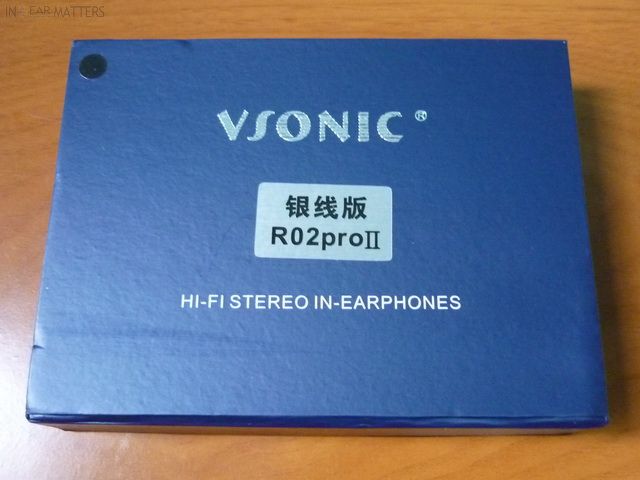
Both IEM come with thick paper box (like a gift box) where the IEM themselves hold by foam. For the kind of price they are asking, the packaging is decent and perhaps a class better than most Chinese made IEM, but nothing spectacular to speaker of. The brownish R04 Pro box with its velvet lining do a good job to accompany and showoff the (also brownish/black colored) R04 Pro. The deviation from the standard black / white color combo that most IEM have is a welcomed change.

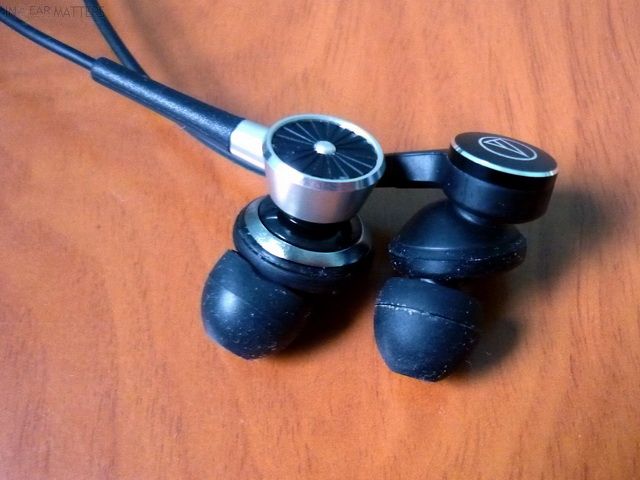
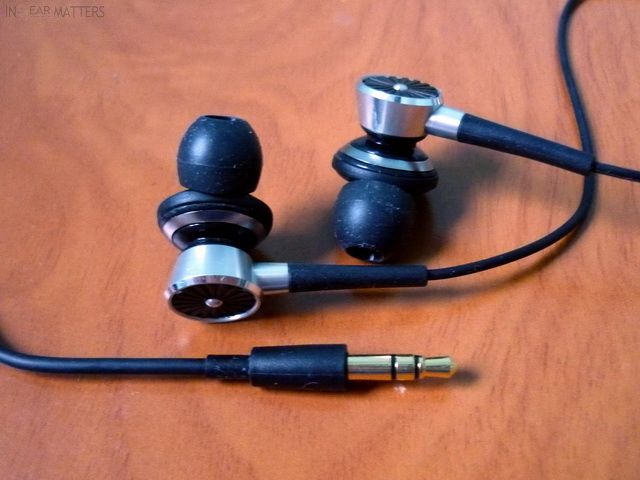
When it comes to build quality, VSONIC certainly shows that they are no slouch. After all, they have been in the OEM/ODM business for quite a while now. However, there is a little historical complication on R02 Pro II that I believe we should clear it up before continuing the review.
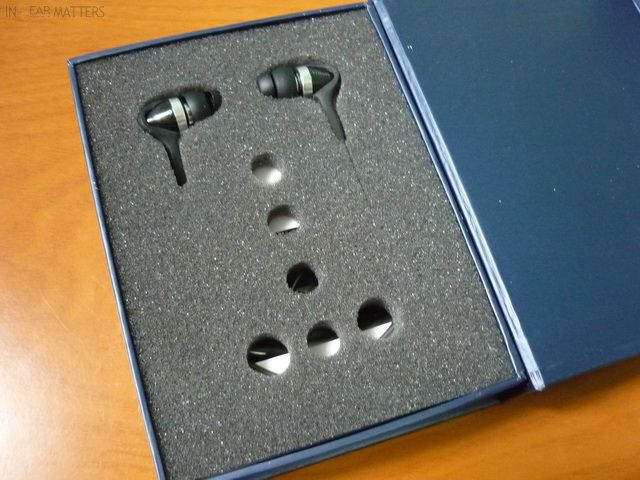
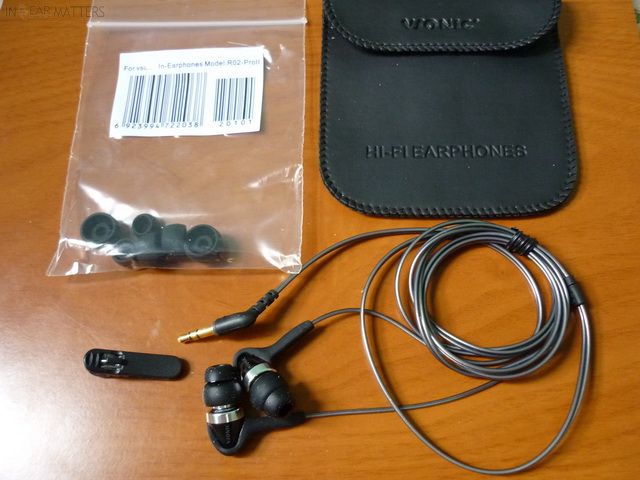

The R02 series has been quite a long running and fairly successful model for VSONIC as both an independent product line as well as an OEM product. If I remember correctly, VSONIC is one of the first (if not the first) to use this type of earpiece design. Some of the similar IEM from well known Western brand are actually OEM'ed by VSONIC using the R02 design. In recent years however, there were unconfirmed news and troubling rumors regarding VSONIC and another company with similar branding - while I don't want to go into all the tall tales and speculations, the fact is there are similar product also named R02 being sold in the current market, as well as several different generations of R02 from VSONIC itself. The point is, the one being reviewed here is the latest R02 Pro II 'Silver Cable' edition (or sometime simply known as the 'silver' edition). It is probably the best sounding and best build of the VSONIC R02 series so far. Not only both transducers of R02 Pro II are matched; they also have their own serial number. Beside using silver plated cable which said to have better sound quality than the typical OFC cable, the cable sleeve is made out of some kind of very soft, tangle free, slightly translucent rubbery material, like a cross between the transparent cable from MEElectronics and the PPE cable from HifiMAN - and like the other two, this cable looks and functions great.
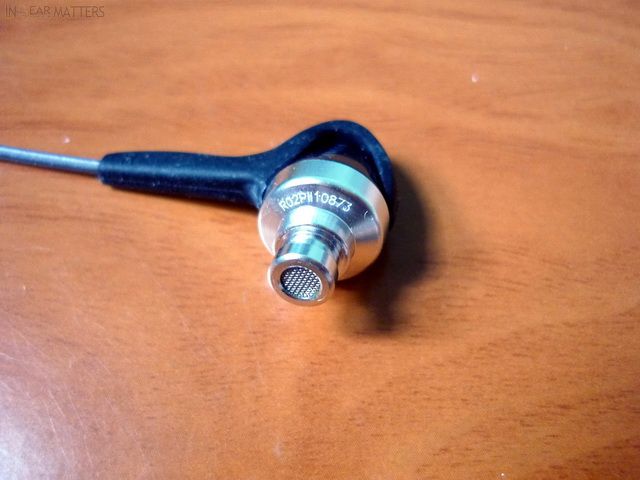


The strain reliefs on the cable are also adequate, though the Y-splitter is on the small size. Microphonics is fairly low. You can use the included shirt clip or wear the IEM over-the-ear to further reduce any cable noise. Isolation is slightly below average. Good for street but not enough when it is really noisy. Like other R02 type of IEM, it is quite comfortable to the ear. Accessories wise, there are a pair of bi-flanges, 3 pairs of different sized single flange eartips (S, M, L), a shirt clip and a soft pouch.
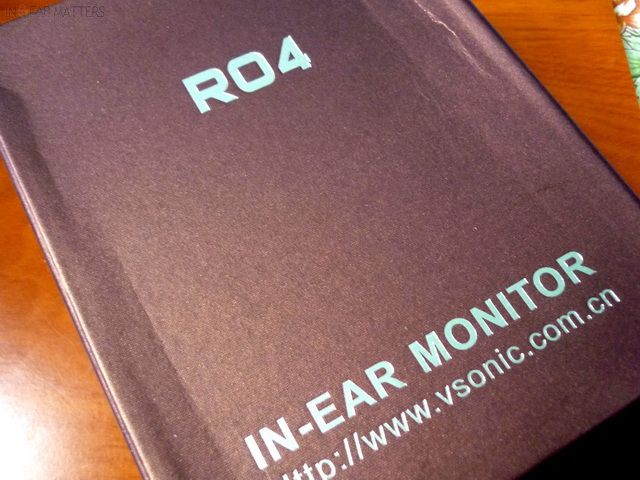
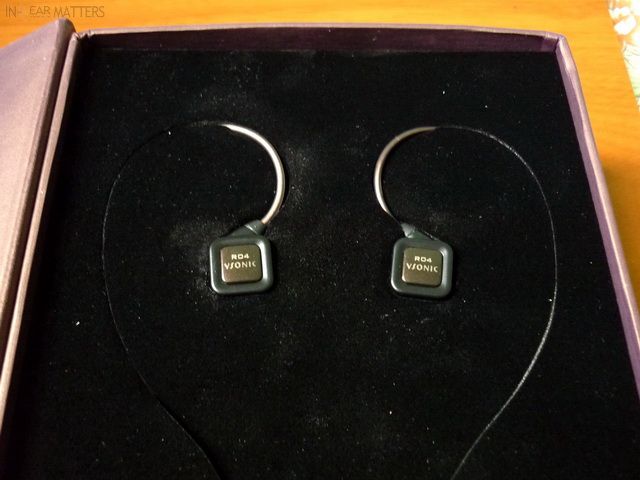

As far as build quality is concerned, R04 (also known as R04 Pro) is one step up from R02 Pro II. It also features the same translucent cable sleeve (though in brownish color instead of the grayish silver on R02 Pro II) with ultra pure mono-crystal OFC wires. The decision to go with OFC instead of silver plated cable seems to be that VSONIC thinks OFC has a better synergy with R04's transducer. The cable itself is physically thicker than that of R02 Pro II's so it is less flexible, but overall it retains most of the same characteristic.
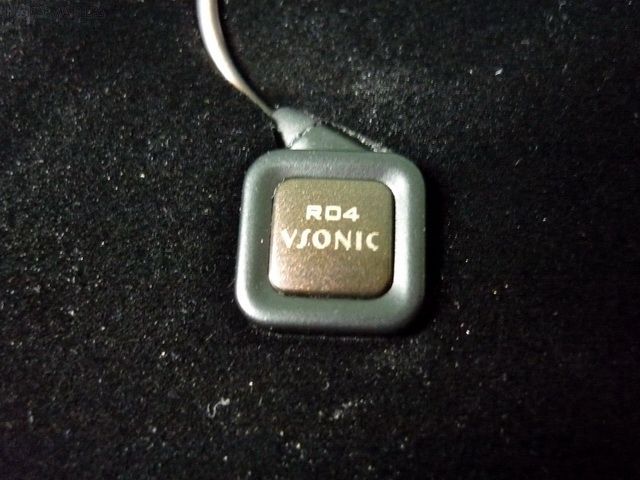
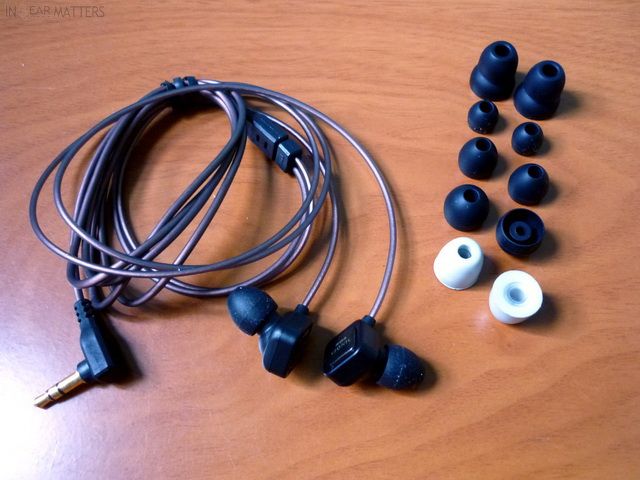

The strain reliefs on R04 are also beefed up. They look great but a little too hard to actually relief any strain. It would be a serious concern but the good news is that the cable is good enough that it doesn't have weak point where it can get over bent. The other downside about the cable is, since it is less flexible as that of R02, it doesn't quite want to stay over-the-ear as it is designed to. A silicone ear guide will fix the problem easily but unfortunately VSONIC doesn't include them in the package. They are however considering to include the ear guide (as well as a case and some other accessories) in their future packaging, as they also have plan to release the R04 Pro to international market.
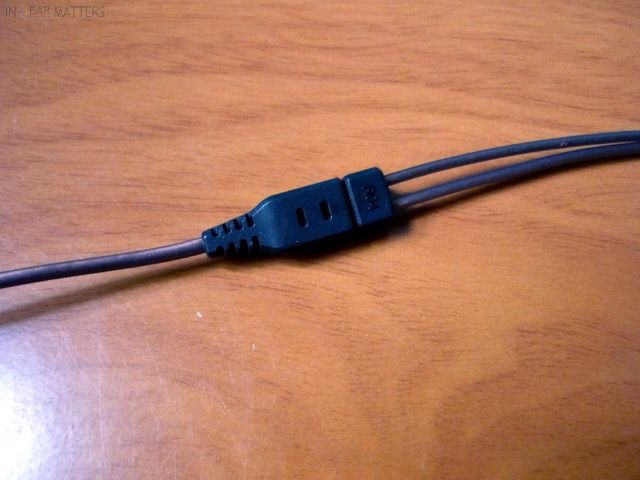
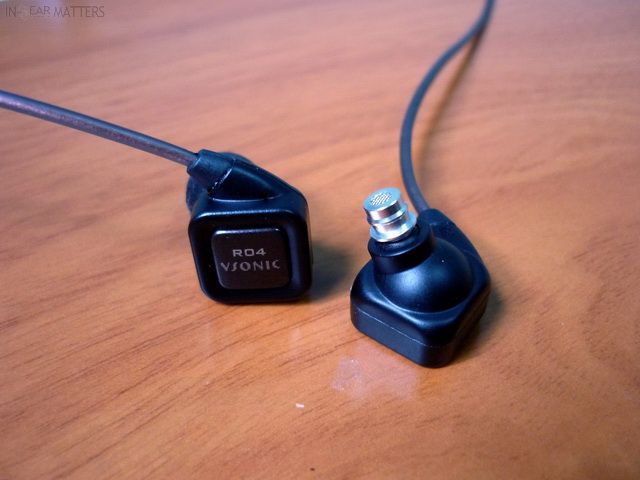

The earpieces are rectangular on the front, but no worry as it actually quite small and fit very well due to the rounded back. One of the main features of R04 Pro is its user adjustable nozzle angle for better fit and comfort. VSONIC claims that they invented the swingable nozzle, but I have seen similar deign on Microsonic Music's IEM before. Regardless of who was the first, the truth is most likely that they had came up with the idea on their own quite some time ago (note: R04 Pro was first announced back in early 2008, around the time Microsonics Music started to get into the IEM business. I personally doubt many know or still remember either of the both events). In any case, the swingable nozzle works fairly well on R04 Pro. It is tight enough that it won't swing wildly, so the nozzle angle remains fairly precise to where you left it. The stem of the nozzle is made out of aluminum which actually looks great.
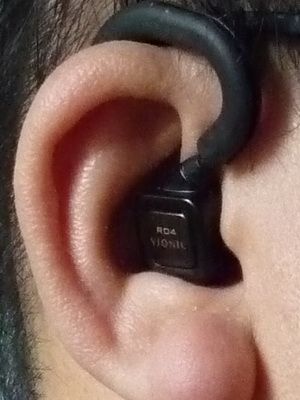


Microphonics is fairly low on the R04 Pro since it is designed to be worn over-the-ear (and best with ear guide). Isolation is slightly over average. The fit is a little on the tight side, but I won't call it uncomfortable. The included eartips are fairly good, but I end up using cloned Sony Hybrid eartips as they give me better fit. Accessories are a bit slim. You only get 4 pair of 3 different sized single flange (S, M, M, L), a pair of foam tip and a pair of big bi-flanges. As mentioned before, there might be more accessories in the future packaging.

Beside the fact that R04 Pro could use more accessories, I think I am quite happy with both of them so far.

Sound Quality
As part of my review procedure, both IEM have been given over 50 hours of burn-in before any serious audition. Generally speaking, dynamic transducer tends to benefit more (but not always) from burn-in. In R02 Pro II, I didn't notice any major change as the overall sound remains fairly 'intact' during the whole time. On the other hand, the bio-cellulose diaphragm on R04 is said to require a little 'loosen up', so I gave it just over 100 hours of burn-in to be sure that it is more or less in its stable stage. I did notice the rough edge on the treble from the initial listening was mostly smoothed after the burn-in.
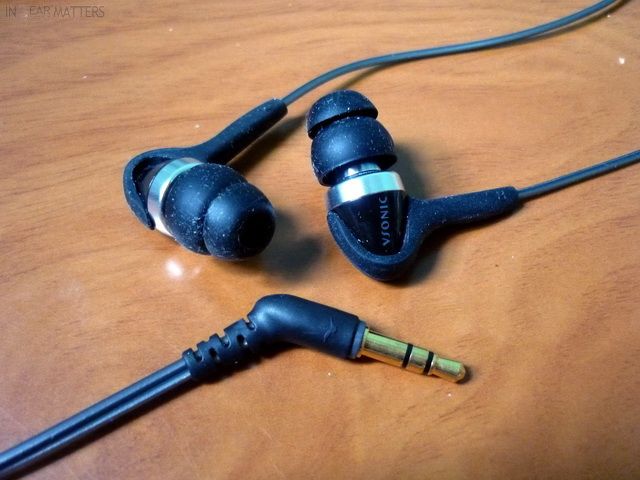


The overall sound signature of R02 Pro II is warm, smooth, fairly musical with a better than average soundstage. Treble has decent extension, but in a fairly smooth fashion and lacks the top sparkle to show off fine detail or give better resolution. Mid is slightly full, but not enough to show texture or being sweet. Bass has good impact and body, though not at the deepest end. Soundstage is good from side to side (width), but not airy enough to show true depth. It might not have the best of anything, but the overall blend doesn't have any major flaw as well. In other words, R02 Pro II has a rather 'popular' sound signature.
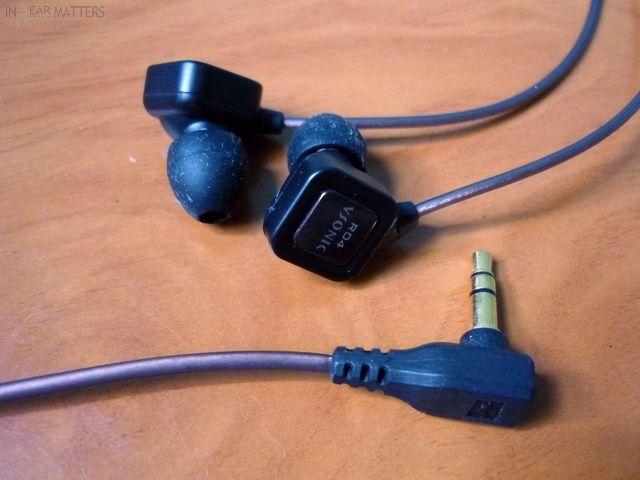


The overall sound signature of R04 is very warm, quite musical, mid-centric with a good vocal performance. Treble extends far enough, but has some unwanted peaks on the lower end and roll off too early at the upper end, giving the feeling of veil with little rough edges. Mid is full, forward, sweet and well textured. Bass is slightly above neutral with decent impact, not quantitatively large in any sense but fairly good in quality and helps to accentuate the mid. Soundstage is only average but with better resolution than R02 Pro II.

Verdict
While R02 Pro II has a mellower, easy going sound to suit different genres of music and taste, R04 strength in mid range makes it great for vocal but a poor choice for most instrumental music. The official price for R02 Pro II is around $30 in China, which is much more attractive than the $40+ price point commonly found on eBay (not to be mistaken with the cheaper and older R02 Pro). The official price for R04 is around $73 in China, and the good news is the only R04 seller on eBay is selling it at a reasonable $78. It is not hard to recommend both models even on the higher prices, but VSONIC ought to find a better way to distribute their products internationally without inflation. Let's cross our fingers that VSONIC could spend more effort on establish better distribution route on the near future with the updated R04 package (with better accessories) and certainly before the release of their true flagship, the R07. With rumors of R07 going to be almost $150 a pot, I can't imagine how much eBay seller will inflate the price.

You can read the quick sum up here. 

 
This above rating is for VSONIC R02 Pro II only and may change without notice. Please refer to the list for a complete listing.

 
This above rating is for VSONIC R04 only and may change without notice. Please refer to the list for a complete listing.

Tuesday, April 13, 2010

t-JAYS: Three to Tango

After just one month of announcing the three a-JAYS (model One, Two, and Three), the company's new dynamic transducer based entry level models, JAYS brings us the three t-JAYS (also One, Two and Three) - and very surprisingly, are also dynamic transducer based. While all three t-JAYS will have one 10mm dynamic transducer in each side, the t-JAYS One will have a standard version of the transducer and the least amount of accessories, t-JAYS Two will have a custom tuned transducer with more accessories, and t-JAYS will have a special TCD transducer in semi-opened configuration (*vented port) with the most accessories. You can expect these to hit the market in May. No info on price yet, but a reasonable guess is they will be another level (or two) up from the a-JAYS. Possible price are $110 for t-JAYS One, $125 for Two and around $140 for Three. [UPDATE] The confirmed price are around $80, $90 and $100 for the three t-JAYS.

Disclaimer: All trademarks and logos in the website belong to their respective owners. Beside getting free review samples, I don't work for or get paid by anyone to write anything on this website, or anywhere else in that matter. Also, free review samples are never sold for any financial gain. I do buy gears and review them, but for simplicity you (the reader) should always assume what I review is free sample in nature (and thus comes with all the bias). The website does have Google Ads and Amazon Associates enabled (which I have no direct control over their content) - though I don't write review for a living, nor does the ads generates enough money to cover my breakfast (in fact, not even one breakfast per week). Listening to music and playing with audio gears are purely hobby for me. In short, I am just an audiophiles who happens to have his own blog. Not a journalist who happens to be an audiophile. Oh, and excuse my writing as I am not a native English speaker and can't afford a proofreader. Also, just because I don't write in a negative tone doesn't mean I don't write down the negative aspect of a gear. Please read them carefully. Last but not least, please note that this site uses cookies to track visitors' number and page view.

Important: All postings are my own personal opinion only and should not be treated as absolute truth. I do get things wrong just like everyone else. Always do your own research!

Lastest Posts

 
Copyright 2008-2016 In Ear Matters. Powered by Blogger Blogger Templates create by Deluxe Templates. WP by Masterplan